











Hip Resurfacing Doctors
List of experienced hip resurfacing surgeons. Listed by location, stats and device used
Dive into the world of Hip Resurfacing through the lens of a 19-year veteran of the surgery. From first-hand experience to a studied analysis of patient outcomes, this in-depth exploration unveils the real benefits of this transformative procedure. Learn how over 90,000 people worldwide have reclaimed their mobility, with impressive results of active and unrestricted lifestyles. Discover the remarkable long-term success rates and the significant impact on patients’ quality of life. Join us in sharing this enlightening journey into the world of hip resurfacing – a beacon of hope for those in need of a hip replacement alternative.
Join us as we delve into the world of hip surgery with an insider’s view on Hip Resurfacing and Total Hip Replacement (THR). Our comprehensive guide, enriched with decades of research, personal experiences, and expert opinions, aims to clarify the differences between these two procedures, their long-term impacts, and how to make the right choice for your health. From understanding the intricacies of your natural bone to the technology that’s revolutionizing these surgical procedures, we promise to shed light on every aspect. Connect with us as we reveal the secrets to successful hip resurfacing surgery and help you navigate this significant health decision.
“Experience, Experience, Experience” – that’s the mantra when it comes to choosing the right surgeon for hip resurfacing surgery. With 18 years of personal experience and insights from thousands of patients, we’ve developed an all-inclusive Patient’s Guide to help you navigate this crucial decision. Our guide will equip you with key questions to ask potential surgeons, tips to evaluate their expertise, and insights into insurance and cost considerations. Moreover, it highlights the significance of personal instincts and confidence in your chosen surgeon. With our guide, you’ll have the clarity to make an informed decision that aligns with your specific needs and comfort. Embark on this life-changing journey with confidence and knowledge.
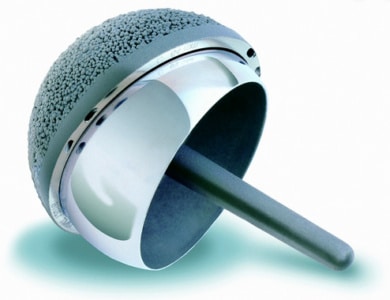
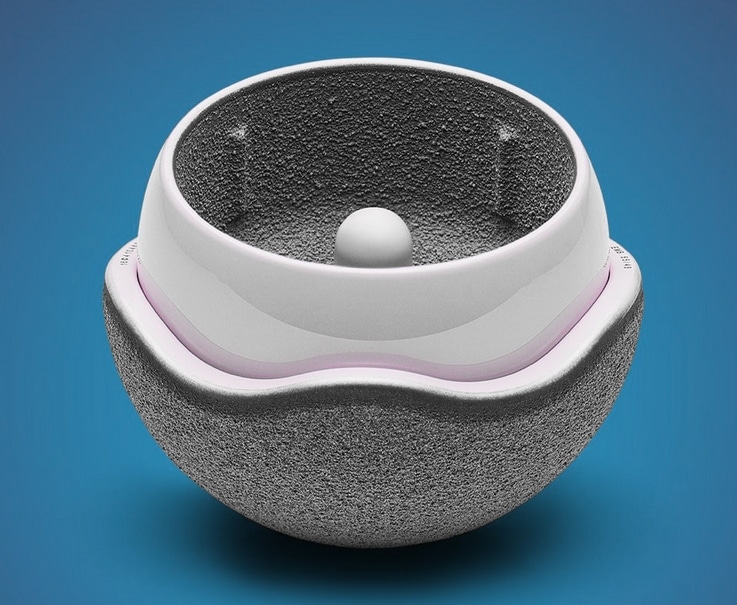
Navigating the landscape of hip resurfacing devices can feel a bit overwhelming. Different types of hip resurfacing devices, such as the Birmingham Hip Resurfacing system, the ReCerf Ceramic on Ceramic system or the Polymotion cobalt chrome head/Vitamin E crosslinked system offer tailored solutions for distinct needs. Each comes with its own set of benefits, adeptly catering to varying medical profiles and activity levels. This article will walk you through the primary types and features of these devices, ensuring you’re equipped with the knowledge you need to make informed decisions about your health and mobility.
November 2025 Update
1 – Florida Locations
Tampa, Florida, United States, 33613
Florida Medical Clinic Orlando Health
Contact: Eric Border
813-979-0440 eric.border@orlandohealth.com
Principal Investigator: Stephen Raterman, MD
2 – Illinois Locations
Chicago, Illinois, United States, 60612
Rush University Medical Center
Contact: Anne DeBenedetti
312-432-2468 Anne.DeBenedetti@rushortho.com
Principal Investigator: Craig Della Valle, MD
3 – Maryland Locations
Baltimore, Maryland, United States, 21215
Sinai Hospital / LifeBridge Health
Contact: Taj-Jamal Andrews
443-506-3022 tandrews@lifebridgehealth.org
Principal Investigator: Michael Mont, MD
Sub-Investigator: Ronald Ronald, MD
4 – New York Locations
NYU Longone
Contact: Daniel Waren
954-559-2251 Daniel.Waren@nyulangone.org
Principal Investigator: Ajit Deshmukh, MD
Sub-Investigator: William Macaulay, MD
Sub-Investigator: Scott Marwin, MD
Sub-Investigator: Matthew Hepinstall, MD
5 – Ohio Locations
New Albany, Ohio, United States, 43054
Joint Implant Surgeons
Contact: Michael Sneller
614-964-0348
snellerma@jisortho.com
Principal Investigator: David Crawford, MD
6 – Oregon
Portland, Oregon, United States, 97239
Oregon Health & Science University
Contact : Hannah Hoffman
503-494-8262
behrensh@ohsu.edu
Principal Investigator: Thomas Huff, MD
7- South Carolina Locations
Midlands Orthopaedics & Neurosurgery
Contact: Dani Gailard Campbell
864-561-5142 dani.gaillard@midorthoneuro.com
Principal Investigator: Thomas Gross, MD
Sub-Investigator: Coleman Fowble, MD
8 – Virginia Locations
Newport News, Virginia, United States, 23606
Hampton Road Orthopaedics
Contact: Anthony Carter, MD
757-871-8132 orthoace34@gmail.com
Principal Investigator: Anthony Carter, MD
9 – Bermuda
Paget, Trevelyan, Bermuda, DV04
Orthopaedic and Physiotherapy Associates
Contact: William Peckett, MBBS, FRCS
+1-441-333-5123 WillPeckett@opa.bm
Principal Investigator: William Peckett, MBBS, FRCS
Sub-Investigator: Ronan Treacy, FRCS
MatOrtho® is proud to announce that the ReCerf® Hip Resurfacing Arthroplasty (HRA) has received its CE mark, confirming compliance with European safety and performance standards. This important milestone expands access to hip resurfacing, enabling wider availability across the UK, Europe and internationally where CE marking supports market access.
ReCerf is the world’s first commercially available ceramic HRA, first approved by Australia’s Therapeutic Goods Administration in November 2024. Since its initial use in 2018, over 1,600 patients have received the device. Patient-reported outcomes are highly positive, and the revision rate remains very low up to six years.
Learn more about the ReCerf Ceramic on Ceramic Device here: https://surfacehippy.info/recerf-info/RECERF2025.pdf
Prof. William (Bill) L. Walter
MBBS (Syd), FRACS (Orth), FAOrthA, PhD (surgery)
***1200 Hip Resurfacings to date***
300 ReCerf to date***
Kolling Building
10 Westbourne Street
Royal North Shore Hospital
St Leonards NSW 2065
Phone: +61 0(2) 9160 6662 (Aust)
Email: lmcdonald@billwalter.com.au
Website: http://billwalter.com.au
Prof Patrick Weinrauch
***1000+ Hip Resurfacings to date
MBBS (Qld) MEng PhD DiMM FRACS FAOrthA
Brisbane Hip Clinic
141 Warry Street
Fortitude Valley Q 4006 Australia
Tel: (07) 3831 9777
Fax: (07) 3831 9771
Website: www.brisbanehipclinic.com.au
Professor Piers Yates
MBBS(Hons) BSc(Hons) MRCS FRCS(Tr & Orth) FRACS(Ortho)
1000+ hip resurfacings since 2001, trained by Jeremy Latham, Gordon Bannister, Treacy***
Orthopaedics WA
Suite 15, Wexford Medical Centre
3 Barry Marshall Parade, Murdoch, WA 6150
Western Australia
Tel: 08 9312 1135
Fax: 08 93321187
email: Email: piersyates@orthopaedicswa.com.au
www.orthopaedicswa.com.au
Mr. David Young MBBS, FRACS (ORTH)
Melbourne Orthopaedic Group
33 The Avenue
Windsor 3181 Victoria
Phone: 03 9510 6828
Email: mailto:davidyoungadmin@mog.com.au
Website: www.davidyoung.net.au
Free Email Consultation
Dr. Koen De Smet
6500 Hip Resurfacings to date ***
320 ReCerf COC Hip Resurfacings to date***
14,000 Hip Replacements to date***
AMC
Anca Medical Centre
Xavier De Cocklaan 68.1
9831 St.Martens Latem (Deurle)
Belgium
+32 9 2525903
http://www.hip-clinic.com/
Valle Giulia Roma Italy
www.ancaclinic.it
E-mail: info@heup.be
John Antoniou MD, PhD, FRCSC
1500 Hip Resurfacings to date***
Jewish General Hospital
Orthopaedic Department, E-003
3755 Cote Sainte Catherine West
Montreal, QC H3T 1E2
Canada
(514) 340-8222 ext.4615
fax: (514) 340-7595
www.shoulderhipknee.com
e-mail: malevisatos@jgh.mcgill.ca
Paul E. Beaulé MD FRCSC
ReCerf Surgeon
The Ottawa Hospital – General Campus
501 Smyth Road, CCW 1640
Ottawa, ON K1H 8L6
613-737-8899 ext. 73265
Paul E. Beaulé MD FRCSC
ReCerf Surgeon
The Ottawa Hospital – General Campus
501 Smyth Road, CCW 1640
Ottawa, ON K1H 8L6
613-737-8899 ext. 73265
Mr. Jim Holland
BHR Trained McMinn & Treacy 1998
1000 Hip Resurfacings to Date***
Newcastle Nuffield Hospital
Nuffield health,
Clayton Road
Jesmond,
Newcastle-upon-Tyne
NE2 1JP
email: jim.holland@nuth.nhs.uk
phone (+44) 0191 256 3039
Mr. Shakir Hussain MBBS, MRCS, FRCS (Tr & Orth)
BHR trained by Ronan Treacy 2020
300+ BHR to date
Using the ReCerf (MatOrtho) Ceramic on Ceramic implant and the Zimmer H1 Ceramic on Ceramic implant
The Royal Orthopaedic Hospital Birmingham UK
Bristol Road South Northfield Birmingham
B31 2AP
Phone 0121 685 4000 ext 55339
Website: https://roh.nhs.uk/our-team/hip/shakir-hussain
Mr. Jeremy Latham MA MCh FRCS(Orth)
600 Hip Resurfacings to date***
Spire Southampton Hospital
Chalybeate Close
Southampton
SO16 6UY
Tel: +44 2380 914483
PA: Anne Harding
Email
Anne.Harding@spirehealthcare.com
Latham Consultancy Website
Dr. Leith Stewart
300 Hip Resurfacings to date***
Room 806
Claremont Medical Centre
Main Road
Claremont
7708 C.P.
South Africa
Te: l +(0)21 683 6037
Fax: +(0)21 683 6633
E-mail: leithstewart@kingsley.co.za
David Lin, MBBS a, Joshua Xu, MD a,*, Patrick Weinrauch, MBBS b,
David A. Young, MBBS c, Koen De Smet, MD d, Andrew Manktelow, MBBS e,
Paul E. Beaule, MD f, William L. Walter, MBBS a,g
Advertisements
My hip resurfacing is still great and I never had problems with it. I still believe hip resurfacing is a great alternative to a total hip replacement for the right candidate – normally younger people that are very active and want no restrictions.
I started my website https://surfacehippy.info in 2005 to provide people with information about hip resurfacing. There are over 2300 articles, 1700 personal stories and 7000+ members in the Hip Talk Discussion Forum.
I work on the website as a full-time job to keep it up to date with new information and stories. I never regretted having a hip resurfacing or starting my website to help people learn about hip resurfacing.
I will continue to share new device information and person stories. There are many new and interesting devices being developed and active trials for hip resurfacing.
Patricia’s 15 Year Anniversary Video from 2021
People ask how to make donations to the Surfacehippy.info website. This is the PayPal link. Donations are always appreciated.
Return to the Sports You love after hip resurfacing
Mission Statement
Surface Hippy® presents information about hip resurfacing. It does not provide medical advice. It is designed to support, not to replace, the relationship between patient and clinician.
Advertising – Revenue for this site is derived from commercial advertising and individual donations. Advertisements are distinguished by the word “advertisements”
Privacy – Surface Hippy® does not share email addresses or personal information with any group or organization.
All information posted here is public and available for all visitors to read.
Content – Surface Hippy® is not controlled or influenced by any medical companies, doctors or hospitals.
All content is controlled and owned by Patricia Walter at Joint Health Sites LLC 2005 – 2025©
Web design by Patricia Walter Surface Hippy® 2005 – 2025©