Surface Hippy A Patient to Patient Guide to Hip Resurfacing

Surface Hippy

A Patient to Patient Guide About Hip Resurfacing

Surface Hippy is Patricia Walter's Personal Project to help people lean about Hip Resurfacing
Patricia is the fulltime author, editor, webmaster and owner of the site


Dr. Bose Interview

Interviewed by Vicky Marlow Freelance Patient Advocate Volunteer

Updated 6/25/08

Dr. Vijay C. Bose
1000 Hip Resurfacings to date ***
BHR Regional Centre - India
Apollo Speciality Hospital
 320 Mount Road
Chennai - 600035  INDIA
E-Mail: bose5vijay@hotmail.com
Telephone: 0091-44-(0) 98400 - 32251
Asian Regional Center for Hip Resurfacing (ARCH) Website

Dr. Bose's Medical Profile

Questions Answered by Dr. Bose
Click on a Questions to Read the Answer

  • I have bone cysts, can I have a hip resurfacing?

  • What is the neck capsule preserving approach?

  • Why is Hip Resurfacing better than Total Hip Replacement?

  • Does Hip Resurfacing Remove More Acetabular Bone than a Total Hip Replacement?

  • Does Hip Resurfacing limit ROM more than a THR?

  • What is the Age Limit for Hip Resurfacing?

  • Which is better a BHR or an ASR?

  • Could a Dislocation happen after hip resurfacing?

  • I have a metal allergy, can I have a hip resurfacing?

  • What Precautions Should I Take Before Surgery?

  • What is the Typical Recovery Time after a Hip Resurfacing?

  • Does hip resurfacing have a serious biomechanical disadvantage - namely a small head-neck ratio?

  • What surgical approach is best - posterior or anterior?

  • Explain Dislocations

  • Is Incision Length important?

  • Explain the Minimally Invasive Approach to Surgery

  • Explain Loose or Slipped Acetabulum Cups

  • Explain of the Posterior vs. Anterior Approach to Surgery

  • Explain the Anterior and Posterior Approaches to Surgery

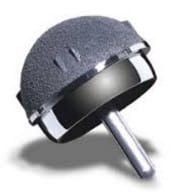
  • Explain the Difference Between the BHR vs ASR Hip Prostheses

  • Explain AVN and Hip Resurfacing

  • Explain Acetabular Bone Loss

  • I have bone cysts, can I have a hip resurfacing?

    The presence of a cysts by itself is not a contraindication for resurfacing. It does not preclude resurfacing automatically.

    One must keep in mind that cyst formation is a natural occurence in osteoarthritis and is very common though the extent ,quantity & location may vary. Cysts are ofcourse much more common and invariably present in AVN.

    The  assessment of certain technical factors would the real  issue. This is based on the amount of residual bone after head preparation.  Some resurfacing prosthesis are thicker at the top and tend to replace more bone in the head  of the femur than other prosthesis. This is a great advantage in managing cysts as at the end of head preparation one is left with nearly 100%  head support in a majority of cases. The cysts get reamed away in bone that would have been removed anyway. The BHR is a good example of a prosthesis of this type.

    The technical criteria which we we have been using in our centre ( ARCH)  for the last 7 yrs without any problems has been termed as 'mid - path recommendations' because we chose 50% as an arbitrary value when we started.

    1.The criteria are an intact - head neck junction across the entire circumference to a height of 50% of profile cut ( the actual height would vary depending on the size used)

    2. Residual bone above the intack head neck junction must be atleast 50% 

    Dr . Sugano from japan has done an experiment where he removed 50% of head of fresh cadaveric bones and implanted a  cemented resurfacing on them . He also implanted a cemented resurfacing on  an equal amt of fresh cadaveric bones with an intact head. He compared the mechanical strength of both in the lab and found the mech. strength to be equal in both groups.

    The surgeon has to see the x-rays and CT scan before he can comment on a  particular case.

    I have tackled successfully some hips with significant cyst formation. See Webpage    please see  advanced OA with cysts and AVN.


    The neck capsule preserving approach

    There are of course many views and opinions amongst surgeons regarding the best approach and what to preserve during the surgical approach. Failures in resurfacing which occurs due to faulty approaches and vascularity issue ,do so at the 3-6 yrs mark ( slow varus collapse with loosening of femoral component ie AVN of the entire head) . Hence, it is difficult to prove or disprove any concept regarding  this issue with statistical proof. One needs a large number of cases followed up carefully for a long time and have an opposite approach as a control group. This would be very difficult in a clinical setting.

    Therefore the best option would be to adopt a common sense path based on some consensus that has already emerged in the resurfacing fraternity.

    It is now more or less accepted that the anterior , anterolat or post approach really has no influence  as regards blood supply to the femoral head. (However other factors like muscle damage etc may differentiate the Clinical result from these approaches.)

     There are two components of blood supply to the femoral head  intra osseus ( within bone ) and extra osseus ( from outside bone).  The relative importance of these two blood supply is again a source of great controversy amongst surgeons. There is agreement however that in primary osteophytic OA , there is more of the intraosseus component and in non -oA cases there is less of the intraosseus component.

    The intraosseus blood supply can be preserved by using a vent during femoral preparation. This prevents fat and cement debris blocking the small veins in the head of femur and neck. Though some surgeons would not subscribe to this theory no one will argue that venting the femur  causes any harm. Hence it an excellent idea in my opinion and this was developed by Derek McMinn.

     The extraosseus blood supply is maintained by preserving the  retinacular vessels on the femoral neck. This has been experimentally again proved by prof. sugano and there is a consensus on this.The best insurance one has in preserving the retinacular vessels would be to preserve the capsule. In theory one can take the capsule off and preserve  only the synovium to retain the retinacular vessels. This may be alright but more risky and technically difficult to acheive. Again no one can argue that presering the capsule does any harm. Hence I advocate this strongly.

     Therefore not venting the femur and not preserving the capsule could potentially cause great harm with femoral component failure at the 3-6 yrs mark. Surgeons who do not  advocate this may be influenced by their early success  with resurfacing but will have to wait 6 yrs before they can say with conviction that these technical issues are not important.

     The added advantage of preserving the neck capsule is the ability to repair capsule to capsule at the end of surgery which accelerates  the immediate rehab . It may restore proprioception to an extent.

    The  NCP approach (Neck Capsule Preserving approach )was developed at the ARCH centre in Chennai, India and is being increasingly adopted by surgeons the world over for hip resurfacing surgery. 


     Why is Hip Resurfacing better than Total Hip Replacement?

  • Suitable for Younger Patients

  • Femur Bone not removed

  • Articulation is metal with metal

  • 'Everlasting' - based on 35 year history in
    Birmingham of Metal on Metal Articulation

  • Activity restriction not required after surgery as there is hardly any risk of dislocation (can sit on floor ,squat, use Indian toilet ,etc)

  • Sport and High demand activities encouraged as usage is not related to life of resurfacing implant

  • Revision surgery not Required for younger patients


  • Does Hip Resurfacing Remove More Acetabular Bone than a Total Hip Replacement?

    One of my patients from India who has had a resurfacing, briefed me on the current discussion in the surfachippy forum regarding Dr. Klappers opinion of losing acetabular bone in an attempt to preserve femoral head bone in resurfacing. He wanted to know my opinion and I thought it would be appropriate for me to post my answer in this forum. Dr. Klapper's opinion is way off the mark. The acetabular size is the most important factor which determines the choice of femoral head size in resurfacing and one never removes more acetabular bone in hip resurfacings. In other words if I would be performing a conventional hip replacement on a given patient instead of resurfacing, I would be using precisely the same size acetabular component in both the surgeries.

    I would go as far as saying that if we are taking out more acetabular bone in resurfacing than in conventional hip replacement , then in my opinion there is no role for resurfacing and it must be discontinued immediately. Acetabular conservation is as important if not more than femoral bone conservation and all resurfacing surgeons recognize and acknowledge this fact. The ability to put large heads in resurfacing stems from the fact that thin shelled acetabular components are possible with the modern metal on metal bearings. However when one uses polyethylene it has to have a large thickness ,which in turn reduces the femoral head diameter , (assuming the acetabular outer shell diameter remains the same). The same argument holds true for ceramic on ceramic bearing to a lesser extent and therefore slightly large femoral head sizes than metal on poly is possible. However an anatomical size is currently possible only with metal on metal bearings.

    I strongly object to the terminology of "large or jumbo head metal on metal hip replacement" that some surgeons use to describe the current versions of the total hip replacements which employ the same metal on metal bearing used in resurfacings. I point out in all my lectures that this variety of total hip replacement is the anatomical head replacement giving the same natural size ( of the femoral head and the acetabulum) that the patient has in other normal hip and the conventional THR are indeed small head hip replacements. One must never lose this perspective. I hope this helps to clear the sudden doubt that was cast on the hip resurfacing principle recently.


    Does Hip Resurfacing limit ROM more than a THR?

    One must remember that with a resurfacing or a THR - one is not aiming to give supra normal movement. One is merely trying to restore normal movement present before the onset of hip arthritis.

    The head- neck offset is an important determinant of ROM. This is restored by a properly done resurfacing even in patients who have a poor head neck offset as in FAI ( femoro - acetabular impingement. Hence full restoration of ROM is consistently possible in a resurfacing.

    A big ball THR has an abnormally high head neck offset due to the thin neck. Thus in theory a big ball THR can produce supra normal movement . However this is neither desirable or feasible in clinical practise as the head neck offset is only one of the factors influencing ROM. Other factors like soft tissue tension come into play. If one goes on making the neck thinner progressively and the head progressively larger --- it is wrong to imagine that this will translate progressively into continued increase in Range of Movement.

    In a badly done resurfacing, impingement can occur and this will lead to abnormal wear pattern and in extreme cases can be seen on x-rays. A properly done Resurfacing will definitely match any type of THR for the ROM.

    It is moot point that a Big ball THR will be more forgiving for surgical errors than a resurfacing in respect to ROM.

    With best regards

    Vijay bose

    chennai


    What is the Age Limit for Hip Resurfacing?

    The chronological age is not an absolute criteria. The physiological age, bone marrow density and the anticipated post surgery activity level of the patients are the deciding factors for the suitability of resurfacing procedure. X-rays must be reviewed by the surgeon to assess technical suitability. The youngest patient to undergo this procedure by Dr. Bose is 14 years old. The oldest male patient was 73 years old and the oldest female patient was 70 years old.


    Which is better a BHR or an ASR?

    I was not keen to do the ASR when it was introduced. After a couple of years when surgeon friends told me that it was good and I saw the results, I tried it out in a phased manner.

    Currently I use the BHR and ASR to almost about 50% each.

    I make the decision based on technical preference in the particular patient. I think the BHR and ASR are best suited for opposite ends of the spectrum of patient and bone size.

    One important advantage of the ASR is the small stem (peg) it has for the smaller sizes. This is the huge advantage in small built individuals as the proportion of the stem ( peg)to the residual bone is less. In contrast the BHR has a same size peg through all sizes. A large peg in a small head size has the potential problem of causing stress shielding . I almost never use the very small size BHR like the 38 anymore.

    In very big built patients who are bound to return to sports etc very soon the BHR is the preferred option as the cup has a more high profile surface for bone contact with a plastic disc for heavy impaction. The ASR is more fine and seats without much impaction. This may be an advantage in relatively soft bone.

    The other important way to harvest the advantage of prosthesis design is the selecting the prosthesis based on the amount of head bone involved. The ASR certainly removes less bone in the head than the BHR. This could be used to the advantage of the patient in a condition like ankylosing spondylitis where the problem is only in the articular cartilage with the bone being intact. Here the ASR scores over the BHR.

    However in a pathology like AVN there is significant head involvement, the BHR has a distinct superiority as one would like to remove the diseased bone and replace it with the metal.

    Osteoarthritis lies somewhere inbetween where some patients have significant head involvement where the BHR would be superior and in some others the head bone may be largely intact and the ASR would be a better option.

    Thus I choose the prosthesis based on technical issues and employ it to the patient’s advantage. Thus in my practice both the ASR and BHR complement each other. After doing more than 200 ASR over the last 2-3 yrs , I am as impressed with the ASR as with the BHR.

    I was one of the first to try out computer aided surgery for resurfacing. This has no advantage except in patient who have had previous surgery like a osteotomy . It has a very important disadvantage of removing all the capsule and soft tissues on the neck of the femur ( to take a computer reading known as bone morphing). This will compromise blood supply. I have to say that currently for resurfacing computer aided navigation is only a marketing tool for surgeons/ companies. Computer aided navigation is very beneficial in knee replacements where one has to align the knee components to the hip and ankle and I use it routinely for knee replacements.

    Wishing you the very best

    With best regards

    Vijay bose
    chennai
    Asian Regional Center for Hip Resurfacing (ARCH) Website


    Could a Dislocation happen after hip resurfacing?

    It is a commonly used statement that a BHR is as 'stable' as a normal hip. However this is a highly qualified statement. This statement is true only if the following criteria are met:

    1. Native angles, inclination , offsets and all anatomical parameters have to be replicated.. If this is not done fully and only accuracy of say 80% is obtained - then the stability is likely to be approx in the region of 80% only. Having said this ,even in this situation, the stability is likely to be many times that of a conventional THR. Therefore I would not call it a surgical error. As surgeons, we get better and better at this replication as we gain experience.

    2. The capsule should be repaired to capsule preferably as it restores the joint 'proprioception'( or position sense). This would kick in the event of a potential dislocation as it would in a normal hip. If the capsule is repaired to bone , it is many times better than doing nothing but does not achieve the proximity to the stability of a normal hip. Again it is not a surgical error if capsule to capsule repair is not done but one cannot expect natural stability.

    3. Other factors that can potentially cause dislocation like impingement must be carefully addressed . The most common offender is the non -restoration of the head neck offset

    One must keep in mind that the BHR is the Ferrari of hips and the conventional THR is an old fiat.

    Even if the Gear knob of a ferrari is not the right size for the driver it shows up because it is pushed to the limit and built for performance. However even if the chassis is broken in an old fiat , it would probably go unnoticed by the owner as it is never 'pushed' for performance. There are many patients after THR s with trochanteric non-unions going on for many years without even being aware of it!


    I have a metal allergy, can I have a hip resurfacing?

    "Allergy after artificial joints is an interesting issue. One must keep in mind that the co-cr-mo alloy has been in clinical use for 45 yrs and is present in 99% of all hip and knee replacement surgery. Even if a component is titanium the articulating part would be always co-cr-mo. Therefore metal sensitivity is not exclusive to metal on metal joints. It is a factor in every joint replacement surgery and therefore has been used in millions of patients. Skin allergy is quite different from deep tissue allergy which is mediated by different mechanisms of immune response by the body. Thus skin testing is of no value when trying to gauge deep tissue hypersensitivity. There have been reports of hundreds of patients who had skin sensitivity but went on to have very successful resurfacing. Only one thing can be said about deep tissue sensitivity at this point in time --- it is very very rare.


    What Precautions Should I Take Before Surgery?

    It is advisable to avoid smoking completely. Blood thinners like aspirin and oral contraceptives should also be stopped for a minimum period of a week prior to surgery. NSAIDs like ibuprofen cause bone softening and must be avoided to the maximum extent possible. Paracetmol (Tylenol) or Proxyvon (Darvocet)  can be taken as alternative medications for the pain. It is advisable to stay in good shape prior to surgery by good aerobic exercises. However, this is a balance and unaccustomed exertion which causes severe pain should be avoided as this will provoke inflammation.


    What is the Typical Recovery Time after a Hip Resurfacing?

    At home they walk with a pair of crutches usually for about 10-15 days and when completely comfortable discard the crutch on the side of the operation first. Then when the other crutch is also felt unnecessary, this is also discarded. Walking, climbing stairs or cycling can be done for long periods of time.

    There is no post –op restrictions after a Hip Resurfacing operation and the patient can use it as a ‘normal hip’. However the soft tissues around the Hip Joint, which were contracted at the time of the hip disease, will take time to relax following the excellent movement that has been restored in the hip. Hence if there is pain while attempting a certain activity like sitting on the floor, it implies the patient is not yet ready for that particular activity. One can give a gap of about a week and then try it again. Like wise the activity level improves in a stepwise manner till the soft tissues also become normal. Patient is ready for sports (inclusive of contact sport) at about 3 months post-op.


    Does hip resurfacing have a serious biomechanical disadvantage - namely a small head-neck ratio?

    Thanks for the mail. I read Dr. Kurtz thoughts on hip resurfacing in his website. His concerns are very valid but I cannot agree with his conclusions.

    In short , his concerns only underline the fact that bad results of resurfacing are due to badly done resurfacings.  The head neck ratio is an important determinant of range of movement and prevention of  impingement.  In a patient with normal anatomy, if one is careful to restore anatomy the range will be like pre-0p range of movement before the onset of arthritis. This is a simple concept.

    However many patients especially young osteoarthritis will have FAI ( Femoro - Acetabular impingement) as the source of their arthritis. It is  of paramount importance to recognize it and deal with it time of surgery. Again patients with an mild unrecognized slip in their earlier years will have OA in the later years. Here again it is crucial to recognize and deal with it at the time of surgery
     As the head component in a resurfacing is centered on the neck and not the head , correct placement will restore the head neck offset to a large degree. During the surgery the metal cap will look very eccentric on the head.

    Surgeons with less experience in resurfacing will think this is wrong and will just put a cap on the translocated head resulting in very low head neck ratio which will lead to problems postop.

    In some severe cases , even if done correctly there may not be adequate head neck offset. This is very rare and in this instance one has two choices. In a very young patient , I would trim the ant neck to re-create the offset. In an older patient I would proceed to use a stemmed component with the same acetabular cup. One cannot underestimate the importance of bone conservation in a young patient.

    In a patient whose head - neck offset is carefully restored to 'normal ' during surgery and the acetabulum inserted in correct orientation , patient will have 'normal' movement postop. Only a contortionist will need more than 'normal' movement.  Although in theory a large head THR can have supra normal movement, this never happens in clinical situations because apart from the head neck ratio there are many other factors determining ROM like muscle tension etc.

    By stating 69 degrees as the functional ROM In resurfacing , is Dr. Kurtz suggesting that resurfacing patients will not be able to sit in a chair as that would require 90 degrees?

    The mathematical calculations is very different from actual clinical results in the human body.
    The most practical example of this is in India where most patients would sit on the floor even if the surgeon advises them not to as it is a very important social requirement.

    We did a study in our unit and found that 20 % of conventional THR were able to sit and 76% of resurfacing patients were able to sit. This again reiterates the importance of surgical technique.

    Purely by choosing a particular prosthesis one cannot guarantee a near normal ROM- it has to be installed correctly. However the resurfacing/ anatomical head  is the best tool in the surgeon's hands to restore near normal ROM.
     
    Dr. Kurtz also has mentioned component height which would give a prominent head neck junction if not seated. I fully agree with this and it would cause serious problems if not seated. The bottom line is again technique related and one must fully seat the component.
     
    The next issue is impingement which he has raised. The concern in very valid because resurfacing acetabular components typically subtend a larger angle at the periphery than conventional THR cups.

    Therefore it is more difficult to bury the anterior edge beyond the bone margin in a resurfacing . I would do this in all cases and would never accept ant edge of the cup to be more proud than the bony margin. Therefore the issue of neck- prosthetic impingement does not arise in my opinion. Again is a matter of surgical technique.
     
    Some of his statements, are simply not true. - like the ones given below
     
    One does not remove more acetabular bone in the acetabulam than in a THR. - if someone is doing this he is doing something seriously wrong. I have explained this concept earlier. If any resurfacing surgeon is doing this he must be condemned.
    The incision for resurfacing is not bigger than for THR . It has been published by Derek McMinn that Hip resurfacing can be done by MIS and results are same. See Website

    My incisions for both resurfacing and THR is about 10 to 14 cms and the length variability depends on the constitution of the patient and not on the procedure. If a surgeon is using larger incision for resurfacing than for THR, it is not wrong but is in the learning curve of the procedure.   Arguments like  that of the removal of labrum and cutting of the capsule in a resurfacing will cause problems sounds to be weak attempts to pick holes in the outstanding functional results that have so far been achieved in the last 12 yrs in resurfacing. The capsule is not removed in a resurfacing but carefully preserved and stitched back capsule to capsule ( the NCP approach or the neck capsule preserving approach for resurfacing). It is certainly true that the surgeon has to give much more importance to the preservation of neck capsule in resurfacing than in a THR.
     
    It appears to me surgeons confuse many aspects of resurfacing. The old poly resurfacings results must not be mixed with the modern metal on metal resurfacings.

    There are two dif concept in a resurfacing which was introduced to the orthopedic community at the same time and hence gets mixed up. The first is the use of an anatomical sized bearing. This implies the head diameter to be the same as that of the native head. It is important to understand that the aim is not to put in the biggest sized head that is possible. If a larger than a native size is uses, it will bring a dif. set of problems. Anatomical sized bearing can be done with  a resurfacing or with anatomical metal on metal THR ( people refer to this wrongly as large head --- it is actually the correct head and all other heads are indeed small heads).  Now , currently one can use the BMHR as well. I have attached the pics which illustrates it.  Hip Resurfacing  is not the aim here - the goal is to restore an anatomical bearing which would be best attempt at restoring near normal function. One has to use the best devise to achieve this goal.
     

    Restoring an anatomical bearing is the goal in a high value hip.- high value hip means in patient who have a lot of demand out of their hips. An elderly sedentary patient can have any hip and any articulation. It would make no difference. However an wear resistant anatomical bearing is the goal in a patient who has demand of the hip for occupational , recreational or social customs.

    This is the first aim. The next issue is of bone conservation . Importance of bone conservation is determined by relative importance of 3 factors, namely the age , the activity level and the bone stock. Bone preservation is not a static concept. Bone conservation would be of immeasurable value in a 25 yrs old and would be probably be a contraindicated in 80 yrs old due to the risk of femoral neck fracture. I have attached a pic to illustrate this point.

    Thus there are two dif issues here - the use of an anatomical sized bearing & bone conservation. These are independent issues . As both these concepts came simultaneously with the advent of resurfacing there has been a hotch-potch with many confusing these two.


    What surgical approach is best - posterior or anterior?

    There are two ways to look at approaches to hip resurfacing or any hip arthroplasty. One is to view it with the amount of muscle damage done. The other is to view it in respect to the blood supply or the vascularity. The post approach is traditionally known as the muscle sparing approach and the anterior and anterolateral approaches are the muscle compromising approaches. These approaches are known as Hardinge approach or London hospital approach. There are many more modifications of this with slight variations but essentially they are the same and they disturb muscles to varying extents. The muscle here refers to the Abductor group or the muscles which lift your leg sideways and is the most important muscle of the hip. The post approach spares this completely. Interestingly there is now an anterior approach which is getting to be very popular for mini -THR and this is known as the mini Watson Jones approach or the micro hip approach. This does not disturb the abductor though it a ant. approach. However resurfacing cannot be done through this approach. Even when one does a THR the head has to be sawed off in place and then delivered out separately. Or in other words the hip cannot be 'dislocated' through this approach which precludes hip resurfacing. However some muscle have to be cut in any approach to get access to the hip and in the post approach, one cuts the short ext rotators which are flimsy , small muscles in the back of the hip. These are stitched back. These muscles are relatively unimportant. It is largely accepted that the post approach is more conducive to early and complete return of function as it is muscle sparing. The ant approaches which disturb the gluteus medius will result in slower and incomplete return of function depending on the amount of muscle disturbed and the intactness of the muscle repair over long term. The younger and the more active the patient , the more would be the perceptible difference between the ant and post. approaches as regards function. Thus an elderly patient having a THR will appear to have the same result with either approach whereas a young patient having a resurfacing will have an obvious difference.

    Michael Freeman , an English surgeon established in 1978, the fact that the blood supply in an osteoarthritic hip is different from a normal hip. In full blown arthritis the blood supply to a large extent changes to inside bone( intra-0sseus) from a pattern that is predominantly outside bone (extra osseus ).Therefore in osteoarthritis , any approach can be attempted without a risk to the blood supply. Hence in osteoarthritis, as the blood supply issue is taken out of the equation only the muscle damage is relevant and therefore post approach is better. In fact when Derek McMinn developed modern resurfacing , he first attempted it through the anterior approach and found so much of muscle damage that he decided to change to posterior.

    However in non-OA indications like AVN , the situation is little different and the intra-osseus blood supply is not well developed. Increasingly it is becoming increasingly obvious that neck capsule preservation is vital in these non-OA indications. Hence we have developed the neck capsule preserving ( NCP ) approach where the end arteries to the neck and head -neck junction has to be preserved. We have been doing the NCP approach for the last 6 yrs in predominantly non-oA indications with excellent results.

    Neck capsule preservation is not possible through the anterior approach and therefore the post approach is more suited for non-OA indications. The other benefit of the NCP approach is the fact the capsule is also repaired back completely so that the surgeon can confidently advise patients that there wont be any restrictions post-op. The repaired capsule will prevent the patient from doing any awkward movement even inadvertently. This is very useful in the first 6 weeks which is the time taken for a pseudo capsule to form when the surgeon does not stitch back the capsule . Therefore capsule repair is of relevance only in the 1st 6 weeks

    The 3rd issue comes into play when a femoral component of a resurfacing is done uncemented. This is the situation where one has to be extraordinarily careful as even a little necrosis of the head bone would cause failure of the implant. When one uses cement, the cement converts the head into a 'composite' of live bone, dead bone and cement. Some bone unviablility is easily tolerated due to the presence of cement. Therefore in uncemented femoral resurfacing one has to use the Ganz approach or surgical dislocation where the blood> supply should preserved entirely. Although this appears to be desirable in theory for all resurfacing it has its own problems. It involves a trochanteric osteotomy and reattachment with screws. The pt has to be partial weight bearing for 6-8 weeks till the ostetomy unites. Prof Ganz from Berne developed this approach for non arthritic hips for pts in their 20s to treat femoral acetabular impingement (FAI). These patients have a completely normal pattern of blood supply (completely exta-osseus) and in spite of this, pts do not develop any problems. This technique is described as surgical dislocation and surgeons employ this for any condition that requires a dislocation of a normal ( non-arthritic) hips. The surgical dislocation is always done posteriorly.

    Thus 3 different situations with regard to resurfacing need 3 different approaches and all of them are posterior! Anterior or posterior refers to which side the hip is dislocated and not on where the incision would be. Irrespective of whether anterior or posterior approach is done , the incision will always be on the side ( exactly lateral). So one cannot deduce approach employed by looking at the incision. Therefore the skin incision is same for both approaches.


    Explain Dislocations

    For those of us outside the US, Rob Barrack is the name that we associate the most with the BHR. He has spear headed the spread of resurfacing in the US and is an excellent choice of surgeon and I would recommend him highly. It is truly unfortunate that this lady has sustained a dislocation of a BHR.
    It is a commonly used statement that a BHR is as 'stable' as a normal hip.

    However this is a highly qualified statement.

    This statement is true only if the following criteria are met.

    1. Native angles, inclination , offsets and all anatomical parameters have to be replicated.. If this is not done fully and only accuracy of say 80% is obtained - then the stability is likely to be approx in the region of 80% only. Having said this ,even in this situation, the stability is likely to be many times that of a conventional THR. Therefore I would not call it a surgical error. As surgeons, we get better and better at this replication as we gain experience.

    2. The capsule should be repaired to capsule preferably as it restores the joint 'proprioception'( or position sense). This would kick in the event of a potential dislocation as it would in a normal hip. If the capsule is repaired to bone , it is many times better than doing nothing but does not achieve the proximity to the stability of a normal hip. Again it is not a surgical error if capsule to capsule repair is not done but one cannot expect natural stability.

    3. Other factors that can potentially cause dislocation like impingement must be carefully addressed . The most common offender is the non -restoration of the head neck offset. One must keep in mind that the BHR is the Ferrari of hips and the conventional THR is an old fiat.

    Even if the Gear knob of a Ferrari is not the right size for the driver it shows up because it is pushed to the limit and built for performance. However even if the chassis is broken in an old fiat , it would probably go unnoticed by the owner as it is never 'pushed' for performance. There are many patients after THR s with trochanteric non-unions going on for many years without even being aware of it!

    Coming to the specifics of this patient.- The Relocated BHR is likely to be stable with time and is unlikely to affect longevity. The only issue is that this patient must avoid extremes of movement to prevent another episode.


    Is Incision Length important?

    Yes, it is true that Minimally invasive approach has been proven not to have great benefits over a conventional incision in terms of blood loss, pain , or speed of recovery in the same surgeons hands. It is only of cosmetic value. All studies to investigate this have been done on two groups of patients in which a single surgeon employs the two approaches in the diff groups.
    When a surgeon who is capable of doing a minimally invasive approach does a conventional approach it is logical that the conventional technique will be only marginally bigger and therefore advantages do not show up in studies. However if a minimally invasive approach of a surgeon is compared with a conventional approach of another surgeon who never does minimally invasive or never makes an attempt to reduce his incision size (within comfort levels)- the differences will show up.


    When one compares an incision which is 5 cms for a particular procedure with another which is 50 cms for the same procedure - the differences will show up without any doubt.


    However to see objective difference between an incision which is 5 cms and 8 cms it is difficult This is a question of degree.MIS approach has been accused to be just a marketing trick which has caused more harm than good. This is true in many instances however one must be careful not to confuse MIS surgery with the concept of minimizing incision size.

     
    When surgeons are focused on doing a surgery with a pre- determined incision size like say 10 cms - they are hell bent on doing this through this incision even though they are struggling and probably getting many things wrong in the deep bone work. This is certainly not good. Scientific papers enumerating surgical disasters when this is employed is common place.


    The other side of the coin is when surgeons chop up patients to extraordinary lengths. Certainly it is equally wrong to cut up tissues unnecessarily when the same can be accomplished to the same degree of accuracy by employing a much smaller incision. In other words it is certainly the duty of the surgeon to minimize the length of incision of any elective procedure but ensuring that he is comfortable and deep bony work is not compromised in any way. There should not be any predetermined length but the surgeon must consciously reduce incision size as a guiding principle. Undoubtedly a hip incision that goes all the way to the knee will have many other bad effects apart from the scar.Therefore there is no doubt that surgeons must be constantly striving to reduce incision size without compromising any other factor. However trying to work with a pre-determined incision size is frequently a recipe for disaster. It is also well accepted that revolutionary techniques like the two incision technique for THR in which the surgeons previous experience with THR is rendered completely useless is very risky when compared evolutionary techniques in which surgeons reduce incision size progressively.


    Surgical speed is another interesting topic. The fastest hand that i have seen wield the scalpel in undoubtedly Ronan Treacy who can finish a resurfacing in 20-25 mts. However Mr. McMInn who invented resurfacing and who of course trained Mr. Treacy still takes close to two hours. The turnover time will be 3 hrs.
    I still take close to two hrs for a resurfacing with a turnover time of 3 hrs. There are so many steps and no matter how fast you do them it takes that amount of time to do all the steps. The neck capsule preservation that i do takes extra time as well. Attempting to reduce incision size and using subcuticular absorbable stitches all add up the time taken for surgery. If I don't do all these I probably can finish in an hour. If I should finish a resurfacing within half an hour there is no doubt I will be skipping steps.


    I have now done more than 500 resurfacings. I have had two failures so far. One was due to deep infection and the other was to head collapse which led to the development of the neck capsule approach.


    Explain the Minimally Invasive Approach to Surgery

    Yes, it is true that minimally invasive approach has been proven not to have great benefits over a conventional incision in terms of blood loss, pain , or speed of recovery in the same surgeons hands. It is only of cosmetic value.

    All studies to investigate this have been done on two groups of patients in which a single surgeon employs the two approaches in the diff groups. When a surgeon who is capable of doing a minimally invasive approach does a conventional approach it is logical that the conventional technique will be only marginally bigger and therefore advantages do not show up in studies. However, if a minimally invasive approach of a surgeon is compared with a conventional approach of another surgeon who never does minimally invasive or never makes an attempt to reduce his incision size (within comfort levels)- the differences will show up.

    When one compares an incision which is 5 cms for a particular procedure with another which is 50 cms for the same procedure - the differences will show up without any doubt. However to see objective difference between an incision which is 5 cms and 8 cms it is difficult This is a question of degree.

    MIS approach has been accused to be just a marketing trick which has caused more harm than good. This is true in many instances however one must be careful not to confuse MIS surgery with the concept of minimizing incision size When surgeons are focused on doing a surgery with a pre- determined incision size like say 10 cms - they are hell bent on doing this through this incision even though they are struggling and probably getting many things wrong in the deep bone work. This is certainly not good. Scientific papers enumerating surgical disasters when this is employed is common place

    The other side of the coin is when surgeons chop up patients to extraordinary lengths. Certainly it is equally wrong to cut up tissues unnecessarily when the same can be accomplished to the same degree of accuracy by employing a much smaller incision. In other words it is certainly the duty of the surgeon to minimize the length of incision of any elective procedure but ensuring that he is comfortable and deep bony work is not compromised in any way. There should not be any predetermined length but the surgeon must consciously reduce incision size as a guiding principle. Undoubtedly a hip incision that goes all the way to the knee will have many other bad effects apart from the scar.

    Therefore there is no doubt that surgeons must be constantly striving to reduce incision size without compromising any other factor. However trying to work with a pre-determined incision size is frequently a recipe for disaster. It is also well accepted that revolutionary techniques like the two incision technique for THR in which the surgeons previous experience with THR is rendered completely useless is very risky when compared evolutionary techniques in which surgeons reduce incision size progressively.

    Surgical speed is another interesting topic. The fastest hand that I have seen wield the scalpel is undoubtedly Ronan Treacy who can finish a resurfacing in 20-25 minutes. However Mr. McMinn who invented resurfacing and who of course trained Mr. Treacy still takes close to two hours. The turnover time will be 3 hrs. I still take close to two hrs for a resurfacing with a turnover time of 3 hrs. There are so many steps and no matter how fast you do them it takes that amount of time to do all the steps. The neck capsule preservation that I do takes extra time as well. Attempting to reduce incision size and using subcuticular absorbable stitches all add up the time taken for surgery. If I don't do all these i probably can finish in an hour. If I should finish a resurfacing within half an hour there is no doubt I will be skipping steps.


    Explain Loose or Slipped Acetabulum Cups

    The issue of cup slippage in the immediate postop period is a controversial one.

    While bone ingrowth takes around 6 wks. - the hydroxy apatite to bone chemical reaction can occur much more quickly.

    If we surgeons feel that the cup is not perfectly tight ( press fit)  during the surgery then we restrict activities for a 6 -8 wk period .This is done in the hope that no precipitating event would occur that would tilt the balance adversely till some stability occurs as we have not achieved primarily stability during surgery. I must say that most of these times we are able to 'escape' component loosening.
    I have done this a few times in my very early cases , many years ago. Of course these days we get such spectacular fixation of the cup primarily that many of my patients are visiting the gym in 5-6 days following surgery.
     
    Achieving primary stability in the resurfacing surgery is more difficult as by definition there are no screws in the acetabular cup of a resurfacing as the entire cup is an articulating part ( monobloc ) cup. This is different from a cup in a THR where the surgeon can easily get additional stability by putting some screws if an adequate press fit is not achieved. Since a liner is always used in a THR cup , this is feasible.

    Thus the early cup loosenings are certainly going to be more in resurfacings esp. when the surgeon is in the learning curve.

    An extension of this concept implies, that surgeons who use screws routinely for the cups in the THR may find the resurfacing cup without screws more difficult to install.
     
    Another issue is that if the cup is installed very loose , a fibrous fixation occurs - very similar to non-union in a fracture situation. If this occurs this will prevent bony incorparation of the cup permanently. This cup is at risk for many years following surgery. One of the things that we look for in the postop films is the bony incorporation ( osteointergration) of the cup.


    Explain of the Posterior vs. Anterior Approach to Surgery

    The post approach which I employ is traditionally known as the muscle sparing approach and the anterior and anterolateral approaches which is very popular in the U.S and some parts of Europe are the muscle compromising approaches.
    The muscle here refers to the Abductor group or the muscles which lift your leg sideways and is the most important muscle of the hip. The post approach spares this completely.
    However some muscle have to be cut in any approach to get access to the hip and in the post approach, one cuts the short ext rotators which are flimsy , small muscles in the back of the hip. These  are stitched back. These muscles are relatively unimportant as the main ext rotator is the gluteus maximus which again is undisturbed. 
    Increasingly surgeons the world over are realizing the importance of preserving capsule over the neck of the femur in resurfacing surgery especially in cases where there is little or no arthritis as in AVN and the blood supply comes from outside bone( extra-osseus) , in contrast to full blown arthritis where the blood supply to a large extent changes to inside bone( intra-0sseus) .
    This NCP approach ( Neck Capsule Preserving ) for resurfacing surgery was developed here in Chennai. The other benefit of the NCP approach is the fact the capsule is also repaired back completely so that the surgeon can confidentently advise patients that there wont be any restrictions post-op. The repaired capsule will prevent the patient from doing any awkward movement even inadvertently.

    Summary of Advantages - Posterior vs. Anterior Approach:

    The posterior approach for hip resurfacing has the following advantages now that the instrumentation has been redesigned specifically for that approach:

    1. No important muscle groups are sectioned.

    2. There is no release of the abductor muscles. They are the most important muscles stabilizing the hip during walking and other activities.

    3. The gluteus medius and minimus remain intact. The only muscle groups that are released are the short rotators that are repaired at the conclusion of the procedure. However, no important gait or other disturbances results from a release even if they are not repaired because the rotation is accomplished by other muscles. One of the two insertions of the gluteus maximus tendon which extends the hip may be released and if so then repaired. The other insertion remains intact and there has been no significant physiological damage to date.

    4. The new instrumentation facilitates a smaller incision especially in thin individuals. A longer incision is necessary in well muscled or overweight patients. A slightly longer incision is necessary in resurfacing than when the head and neck are amputated in conventional THR. In hip resurfacing the surgeon must work around the head and neck to be able to prepare the acetabulum and implant the socket accurately. Hip resurfacing is technically more demanding and takes slightly longer. Since hip resurfacing is an anatomical replacement, leg length equalization is facilitated and more precise. Leg length equalization in THR is more demanding, less certain and requires an intra-operative X-ray.

    5. The anterior approach requires removal of some of the abductor muscles for either hip resurfacing or THR. Even though they are repaired this reattachment may not be 100% successful.


    Explain the Anterior and Posterior Approaches to Surgery

    Thursday August 10, 2006
    There are two ways to look at approaches to hip resurfacing or any hip arthroplasty. One is to view it with the amount of muscle damage done. The other is to view it in respect to the blood supply or the vascularity. The post approach is traditionally known as the muscle sparing approach and the anterior and anterolateral approaches are the muscle compromising approaches. These approaches are known as Hardinge approach or London hospital approach. There are many more modifications of this with slight variations but essentially they are the same and they disturb muscles to varying extents. The muscle here refers to the Abductor group or the muscles which lift your leg sideways and is the most important muscle of the hip. The post approach spares this completely. Interestingly there is now an anterior approach which is getting to be very popular for mini -THR and this is known as the mini Watson Jones approach or the micro hip approach. This does not disturb the abductor though it a ant. approach. However resurfacing cannot be done through this approach. Even when one does a THR the head has to be sawed off in place and then delivered out separately. Or in other words the hip cannot be 'dislocated' through this approach which precludes hip resurfacing. However some muscle have to be cut in any approach to get access to the hip and in the post approach, one cuts the short ext rotators which are flimsy , small muscles in the back of the hip. These are stitched back. These muscles are relatively unimportant. It is largely accepted that the post approach is more conducive to early and complete return of function as it is muscle sparing. The ant approaches which disturb the gluteus medius will result in slower and incomplete return of function depending on the amount of muscle disturbed and the intactness of the muscle repair over long term. The younger and the more active the patient , the more would be the perceptible difference between the ant and post. approaches as regards function. Thus an elderly patient having a THR will appear to have the same result with either approach whereas a young patient having a resurfacing will have an obvious difference.

    Michael Freeman , an English surgeon established in 1978, the fact that the blood supply in an osteoarthritic hip is different from a normal hip. In full blown arthritis the blood supply to a large extent changes to inside bone( intra-0sseus) from a pattern that is predominantly outside bone (extra osseus ).Therefore in osteoarthritis , any approach can be attempted without a risk to the blood supply. Hence in osteoarthritis, as the blood supply issue is taken out of the equation only the muscle damage is relevant and therefore post approach is better. In fact when Derek McMinn developed modern resurfacing , he first attempted it through the anterior approach and found so much of muscle damage that he decided to change to posterior.

    However in non-OA indications like AVN , the situation is little different and the intra-osseus blood supply is not well developed. Increasingly it is becoming increasingly obvious that neck capsule preservation is vital in these non-OA indications. Hence we have developed the neck capsule preserving ( NCP ) approach where the end arteries to the neck and head -neck junction has to be preserved. We have been doing the NCP approach for the last 6 yrs in predominantly non-oA indications with excellent results.

    Neck capsule preservation is not possible through the anterior approach and therefore the post approach is more suited for non-OA indications. The other benefit of the NCP approach is the fact the capsule is also repaired back completely so that the surgeon can confidently advise patients that there wont be any restrictions post-op. The repaired capsule will prevent the patient from doing any awkward movement even inadvertently. This is very useful in the first 6 weeks which is the time taken for a pseudo capsule to form when the surgeon does not stitch back the capsule . Therefore capsule repair is of relevance only in the 1st 6 weeks

    The 3rd issue comes into play when a femoral component of a resurfacing is done uncemented. This is the situation where one has to be extraordinarily careful as even a little necrosis of the head bone would cause failure of the implant. When one uses cement, the cement converts the head into a 'composite' of live bone, dead bone and cement. Some bone unviablility is easily tolerated due to the presence of cement. Therefore in uncemented femoral resurfacing one has to use the Ganz approach or surgical dislocation where the blood> supply should preserved entirely. Although this appears to be desirable in theory for all resurfacing it has its own problems. It involves a trochanteric osteotomy and reattachment with screws. The pt has to be partial weight bearing for 6-8 weeks till the ostetomy unites. Prof Ganz from Berne developed this approach for non arthritic hips for pts in their 20s to treat femoral acetabular impingement (FAI). These patients have a completely normal pattern of blood supply (completely exta-osseus) and in spite of this, pts do not develop any problems. This technique is described as surgical dislocation and surgeons employ this for any condition that requires a dislocation of a normal ( non-arthritic) hips. The surgical dislocation is always done posteriorly.

    Thus 3 different situations with regard to resurfacing need 3 different approaches and all of them are posterior! Anterior or posterior refers to which side the hip is dislocated and not on where the incision would be. Irrespective of whether anterior or posterior approach is done , the incision will always be on the side ( exactly lateral). So one cannot deduce approach employed by looking at the incision. Therefore the skin incision is same for both approaches.


    Explain the Difference Between the BHR vs ASR Hip Prostheses

    We, orthopedic surgeons find it difficult to weed out commercial promotional jargon from scientific data. I sure appreciate how difficult it would be for patients! Regarding the comparison of devices, the BHR was the original device and the others are copies of it. The BHR presently has a 9 year clinical history.

    The 35 yr history of some metal on metal hip replacements  (Ring & Mckee  Faraar) was the major catalyst that  led to the development of the BHR  and the Birmingham  designers took great care to duplicate the metal and clearances of the historical devices so that they can draw on the 35yr history. All other devices are deviances from the historical metal on metal THR devices and thus cannot draw on that history.

    All other devices have a very short clinical history. Every manufacturer naturally will claim that their devise is the best and will quote varied reasons substantiating their claim. However , in any kind of joint replacement surgery , the track record is the most important feature and must be given exceptional importance. It is quite opposite of choosing a car, where the latest model is probably the best. The performance of a prosthesis when implanted may be quite different from lab tests. One can always exchange the car if it does not perform well but unfortunately in joint replacement  things are not so simple!

    The ASR (as all other prosthesis ) have claims of superiority on lab testing. This is completely different scenario from how the implant behaves after implantation in a patient. Only time will tell as to which of these will work and which will fail.

    Depuy (manufacturer) claims that the ASR is better because it is  thinner than the BHR. Another manufacturer claims exactly the opposite  i.e. that their product is thicker than the BHR and hence superior. Their opinion is that the thicker component serves the resurfacing cause better. The same goes for stem. Some of the new designs have smaller design claiming less stress shielding and some other have longer and thicker stems claiming to  splint the neck of femur avoiding a fracture risk.

    Thus you will find people changing some characteristics of the gold standard BHR and claim superiority.  Some of these changes may indeed be good. However only time will tell whether they are desirable changes or fatal mistakes.

    The history of orthopaedic surgery is littered with similar cases. One of the most important and well known is the Exeter THR stem which currently has  the best results of a cemented hip replacement and can be considered to be the Gold standard. The manufacturer/developer surgeons decided to alter the surface treatment into a matt finish from a polished one. This resulted in a  very high failure rate but it took 6-7 yrs for someone to work out the association. The Exeter stem then went back to its original polished stem. Who could a guessed that a surface finish of a non articulating part of a prosthesis would cause such a drastic change in results?

    The responsibility of the surgeon is not confined to the surgery alone. Post op performance of the implant is also a surgeon's responsibility . This makes me cautious.

    I am not a gambling man, hence I stick with the BHR. However, when the choice is not made by me , I do use other devices.  Patients have requested specific devices and i have used them. In other instances surgeons have asked me to use other  implants when I have gone over to  other centres to help them do resurfacing surgery and I have complied. I have nothing against other implants but no one can deny that they are a bit of a gamble.


    Explain AVN and Hip Resurfacing

    Tony has informed me about the AVN discussion currently on surfacehippy. I have given the explanation of how a resurfacing works in AVN. I must apologise that it is long- winded and a little technical . However with the best of my efforts i could not make it any easier as it a complex concept to explain.

    I have now done about 185 resurfacings for AVN cases over a 5 year period with many patients crossing the 4 yrs mark. It is interesting to note there has not been a collapse or fracture neck of femur even in a single patient.

    It is wrong to think that the AVN continues forever in the femoral head. AVN is a one time event in which a strikingly similar sector of necrosis occurs in most femoral heads ( anteo supero lateral
    part.) due to blockage of presumably the same vessel in all patients. This sets off a series of changes which are is marked by sectoral collapse. This is primary collapse of AVN and most patients are likely to develop it. Any kind of core decompression / bone grafting is a surgical attempt at preventing /postponing this event. These joint salvage procedures ( according to literature) achieves their goal in about 30 - 50% of cases.

    The rest of the collapse (which at times is confused with primary AVN collapse )even by medical personnel is actually secondary mechanical collapse and this occurs because of 3 factors:

    1.hip stiffness, ( more the stiffness the more the likelyhood of secondary collapse)

    2.wrong biomechanics leading to point loading.

    3.soft bone ( non wt bearing and NSAID abuse).

    However once resurfacing is done secondary collapse will not continue as the normal biomechanics and range of movement is re established. The portion that is already collapsed ( primary or secondary) has to be taken out and substitued with cement or bone graft at the time of surgery. This is a simplisitic explanation for peaple not familiar with the concept. However this does not represent the complete story.
    Please read on if you are a medical personnel.


    The 3rd type of collapse that can occur is specific to resurfacing and is called as 'Global AVN' tertiary collapse ,or delayed primary failure of resurfacing. In this the resurfaced head slowely tilts and falls off over a period of months. This is the number one concern today in the field of hip resurfacing. There are many theories as to why this occurs but the most plausible one is that it is procedure induced and it involves disturbing the soft tissues of the neck and the head-neck junction of the femur ( not the head of femur) at the time of surgery. One must keep in mind that AVN occurs in individuals following pretty trivial reasons like a fall, a single dose of steroid or surgery in the vicinity of the hip joint like intramedullary nailing of the femur. To assume that the varied approaches described for resurfacing ( anterior , lateral , posterior & trochanteric osteotomy) will not cause AVN in the femoral head is naive. It is now increasingly becoming obvious that Apical , sectoral primary AVN is caused during the surgical approach in a very significant proportion of patients of any surgeon's series of hip resurfacings. However, this is not of any consequence and does not compromise the result.

    In summary- the primary, sectoral classical AVN occurs in a majority of resurfacings during the surgical exposure even in cases which did not have AVN to begin with. However with the usage of low viscosity cement one performs a 'capituloplasty' on the head, similar to the vertebroplasty done in the spinal vertabrae with the injection of cement. This transforms the material under the resurfacing head into a composite of live bone, dead bone and cement.  If this composite is seated on a vascular and biologically favourable neck and head neck junction , then this composite performs well. (The biological status of the neck and head neck junciton is similar to health of a fracture fragment in fracture plating surgery.ie Soft tissue cover of a bone fragment is essential for the end arteries to supply no matter from where the blood is coming from) However for some resion the neck capsule and soft tissues get damaged then one gets 'global AVN' and the component drifts and fails. - termed as delayed primary failure . This is independent of the fact as to whether primary , sectoral AVN in the head was present before surgery or occured during the time of the surgery.

    Therefore , resurfacings in AVN are no different from resurfacings done for other indications. However if secondary collapse has been left for too long it destroys the femoral head bone stock completely precluding hip resurfacing. If there is sufficient bone stock at the time of surgery a AVN resurfacing is likely to perform as well as any other resurfacing. The 185 AVN resurfacing represents roughly half of my series of about 400 cases.


    Explain Acetabular Bone Loss

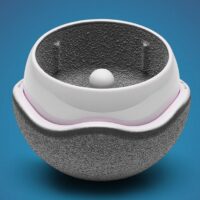
    One of my patients from India who has had a resurfacing, briefed me on the current discussion in the surfachippy forum regarding Dr. Klappers opinion of losing acetabular bone in an attempt to preserve femoral head bone in resurfacing. He wanted to know my opinion and I thought it would be appropriate for me to post my answer in this forum. Dr. Klapper's opinion is way off the mark. The acetabular size is the most important factor which determines the choice of femoral head size in resurfacing and one never removes more acetabular bone in hip resurfacings. In other words if I would be performing a conventional hip replacement on a given patient instead of resurfacing, I would be using precisely the same size acetabular component in both the surgeries.

    I would go as far as saying that if we are taking out more acetabular bone in resurfacing than in conventional hip replacement , then in my opinion there is no role for resurfacing and it must be discontinued immediately. Acetabular conservation is as important if not more than femoral bone conservation and all resurfacing surgeons recognize and acknowledge this fact. The ability to put large heads in resurfacing stems from the fact that thin shelled acetabular components are possible with the modern metal on metal bearings. However when one uses polyethylene it has to have a large thickness ,which in turn reduces the femoral head diameter, (assuming the acetabular outer shell diameter remains the same). The same argument holds true for ceramic on ceramic bearing to a lesser extent and therefore slightly large femoral head sizes than metal on poly is possible. However an anatomical size is currently possible only with metal on metal bearings.

    I strongly object to the terminology of "large or jumbo head metal on metal hip replacement" that some surgeons use to describe the current versions of the total hip replacements which employ the same metal on metal bearing used in resurfacings. I point out in all my lectures that this variety of total hip replacement is the anatomical head replacement giving the same natural size (of the femoral head and the acetabulum) that the patient has in other normal hip and the conventional THR are indeed small head hip replacements. One must never lose this perspective. I hope this helps to clear the sudden doubt that was cast on the hip resurfacing principle recently.


    Dr. Bose and Plaque of Appreciation from his overseas patients 2008


    Plaque presented to Dr. Bose in appreciation of his service 2008

    I am honored that some of my overseas patients have got together and made a plaque in appreciation of our hip surgery team and a donation for the Jay Coulter fund.

    Gary Klein has come back to Chennai to get his second hip done. He brought the plaque and the donation.

    I have attached a picture of the plaque.

    With best regards

    Vijay bose
    chennai
    Asian Regional Center for Hip Resurfacing (ARCH) Website
     

    Plaque present to Dr. Bose by overseas patients.  June 2008


    L10 Web Stats Reporter 3.15 LevelTen Hit Counter - Free PHP Web Analytics Script
    LevelTen dallas web development firm - website design, flash, graphics & marketing
    Contact Patricia

    Advertisements

    Advertise on
    Surface Hippy


    8000
    Unique Visitors
    per month use
    Surface Hippy


    Contact Patricia

    Hip Talk generates over 50,000 page views a month.

    Surface Hippy would like to Thank the many supporters of the website. 

    The website content is not controlled by any medical companies, doctors or hospitals.


    What's New?

    Dr. Bose presented plaque by overseas patients

    Dr. Bob Arnot's Bi-lat hip resurfacing story with Dr. Su

    What hip resurfacing device is most popular?

    Hip Resurfacing Surgeons Video Interviews

    Web design by Patricia Walter Copyright Surface Hippy 2006

    Statistics Page

    Mission Statement - Surface Hippy is a patient to patient guide to hip resurfacing. It does not provide medical advice. It is designed to support, not to replace, the relationship between patient and clinician.
    Advertising - Revenue from this site is derived from Google Ads, commercial advertising and individual donations.
    Privacy - Surface Hippy does not share email addresses or personal information with any group or organization.
    Content - Surface Hippy is not controlled or influenced by any medical companies, doctors or hospitals.
    All content is controlled by Patricia Walter  -
    Joint Health Sites  LLC