Surface Hippy A Patient to Patient Guide to Hip Resurfacing

Surface Hippy

A Patient to Patient Guide About Hip Resurfacing

Surface Hippy is Patricia Walter's Personal Project to help people lean about Hip Resurfacing
Patricia is the fulltime author, editor, webmaster and owner of the site


Dr. Brooks Interview

By Patricia Walter Updated January 26, 2008

Dr. Brooks of Cleveland Ohio

Peter Brooks MD, FRCS(C) - BHR trained McMinn 2006
200 Hip Resurfacings to date ***
Cleveland Clinic
9500 Euclid Avenue
Cleveland, OH 44195
Phone 216-444-4284 (toll free 800-223-2273)
Cleveland Clinic Website

Dr. Brooks  Medical Profile


Explain the surgical approaches to hip resurfacing and what approach you prefer

Most hip replacement and resurfacing surgery in the USA, about 80%, is performed through a posterior approach. About 20% of US hip surgeons prefer some variation of an anterior approach (antero-lateral, direct lateral, trans-gluteal, or true anterior). Anterior approaches are also more common in Europe and Canada.

In the posterior approach, the incision, dissection, and dislocation of the hip joint are all performed posteriorly (toward the buttock). The large gluteus maximus is split, and the gluteus medius and minimus muscles (hip abductors) are retracted, but not cut. A number of smaller muscles, the “short external rotators” including piriformis, obturator internus, gemelli, quadratus, and obturator externus, are cut, and the tendon of gluteus maximus may also be partially divided. With these out of the way, the posterior hip capsule is incised, and the hip is dislocated posteriorly by turning the foot toward the ceiling. The acetabulum and femoral head are then resurfaced, the muscles and capsule are repaired, and the incision closed.

In the direct lateral approach, (or trans-gluteal approach as it is also known), the incision is on the side of the hip, and from there the dissection proceeds towards the front of the hip joint. The hip abductors (gluteus medius and minimus) are split in the line of their fibers, peeled off the greater trochanter of the upper femur in continuity with upper fibers of the vastus lateralis, and retracted anteriorly, allowing the anterior capsule to be cut, and the hip to be dislocated anteriorly, with the foot pointing down to the floor. During closure, these muscles all tend to lie back where they belong, and since they have not been cut across their fibers, there is no tendency for their repair to pull apart. The antero-lateral approach is similar, but retracts or detaches, rather than splits, the abductors.

The true anterior approach can be adapted to hip resurfacing, actually better than for hip replacement, since exposure to the shaft of the femur is difficult (and not needed in resurfacing). It is not popular among surgeons who operate on adults, but is fairly common in pediatric orthopedics.

Different approaches have different issues. The posterior approach is very well known in the USA, and BHR developers Mr. McMinn and Mr. Treacy use it routinely as well. Theoretically it should have a higher dislocation rate, due to the fact that dislocation almost always occurs posteriorly, and this approach disrupts all the potential restraints to posterior dislocation. But dislocation after hip resurfacing is much less of a problem than it is with hip replacement, due to the very large head size. The blood supply to the femoral head stands a greater chance of damage through the posterior approach, since that is where the vessels mostly are. The important hip abductors (gluteus medius and minimus) are left completely intact.

The direct lateral (trans-gluteal) approach has the advantage of a lower dislocation rate, and less likelihood of damage to the blood supply of the femoral head. In addition, no muscles are actually cut across; they are just split, or teased apart in the line of their fibers, which should lead to more reliable healing. The exposure of the socket is a “straight shot”, since the acetabulum is an anteriorly facing structure. The disadvantages are that there is nonetheless surgical trauma to the abductors which, if substantial, could cause a limp. There are also reports of heterotopic ossification, although this may occur with any approach.

The true anterior approach can be associated with injury to a sensory nerve responsible for the side of the thigh (lateral femoral cutaneous nerve), and the location of the incision in the groin is not the cleanest part of the body. It is also by far the least commonly used of these incisions for adult hip surgery, so at least for the time being, we do not have a lot of data.

The main thing to keep in mind is that any of these surgical approaches can work just fine. All have been modified in many ways as surgeons find better ways to do things. The most important thing for a patient to decide is who will do their surgery, not how it will be done. The surgeon, drawing on his or her own training, experience and beliefs, will decide what works best in their hands.


What Hip Resurfacing Device Do You Prefer?

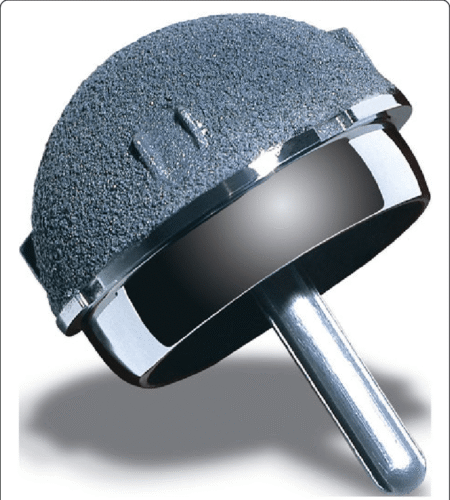
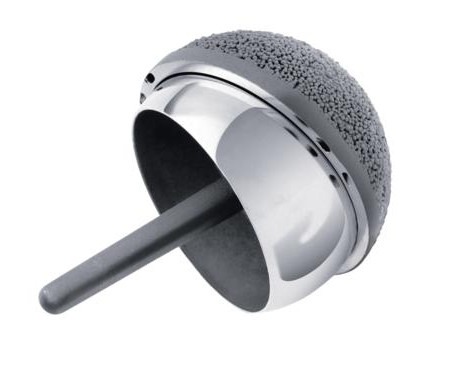
I prefer the BHR (Birmingham Hip Resurfacing). It has the longest track record, and better results on the Australian Registry and Oswestry Outcomes Study than others. There are quite a few variables in instrumentation, cement technique, device dimensions, clearance between the ball and socket (for self-lubrication), and metallurgy. With all those variables, no one can be sure what the very best combination would be, other than to look at long-term data. That is what the BHR group provides. Lab testing, although important, is less compelling.

Take a look at the 2007 Australian National Joint Replacement Registry http://www.aoa.org.au where they report on many different resurfacing systems available in that country. There is a wealth of information there. It shows, for instance, that in men < 55, resurfacing does better than hip replacement (HT19, HT25). It also shows that the BHR outperforms other commonly used devices in terms of revision rates, apart from Adept and Mitch that were recently released and are promising (HT37). This may of course change with time, due to learning curves or other factors. I have an open mind, but for now the BHR has the largest series, and the best data.

I should also point out that I am a paid consultant on hip issues for Smith and Nephew, which markets the BHR. However, I receive no remuneration based on whether I implant BHR's or not.


What Surgical Approach Do You Use?

I use the direct lateral approach. This is a type of anterior approach. Post-operative limp is not a problem.

There is no difference in the results of anterior vs. posterior approach, although that is surprising in that the blood supply to the femoral head is disrupted more during posterior approaches. The most important thing is the experience and preference of the surgeon, 80% of whom in the US are using the posterior approach.


How do you feel about cementless devices? Do you prefer cemented and why?


The BHR femoral component, being cemented, is fully secured to the bone immediately. The femoral issue is that the freshly shaped bone is weak, has to heal, and remodel according to new loads. That takes many months. During that period, there is a small risk of femoral neck fracture. On the socket side, the hydroxyapatite coating on the rough surface facilitates bone ingrowth over several months. I do not allow running and jumping for 1 year.

In general I use cementless total hips and cemented total knees. The difference is due to the fact that to cement a traditional hip stem, you fill up the femoral canal with doughy cement, which, when it hardens, is extremely difficult and destructive to ever get out if you have to. On the other hand, cementing a knee prosthesis requires only a thin layer of cement, which is easy to revise. Of course, data is important here too. Cementless total hips and cemented total knees do extremely well.

What about resurfacing? The BHR is "hybrid", in other words, a cemented femoral component and a cementless socket. The developers tried fully cementless resurfacing and fully cemented resurfacing. Their data showed that the hybrid was better, so that is the direction they went. And in hip resurfacing, as in knee replacement, the cement is just a layer, not a column of cement down the femoral shaft, so it is easy and safe to revise if necessary.


Does the length of incision influence the rehabilitation?

The length of the incision has to do with the amount of early post-operative pain, but not directly with the speed of recovery. That depends upon how the tissue inside, like muscles, are dissected, handled and repaired. That in turn is dependent upon the techniques and skills of the surgeon and assistants.


Do you preserve the hip capsule during your hip resurfacing surgeries?

I do not preserve the anterior capsule. This is removed during the surgical approach, and that is a good thing, because it is normally shortened and contracted by the arthritic process. If I repaired it, that might limit full extension of the hip, which in turn could stress the lower back. That is one reason why posterior surgeons make a point of also cutting the anterior capsule and leaving it to stretch out, while they repair the posterior capsule to prevent dislocation and help the blood supply.

The more important posterior capsule is left entirely alone in my surgical approach. This means the dislocation rate in my practice is practically zero in hip replacement, and is zero in BHR's. Interestingly, there were quite a few dislocations in the early US BHR experience, probably related to learning curves and the posterior approach.


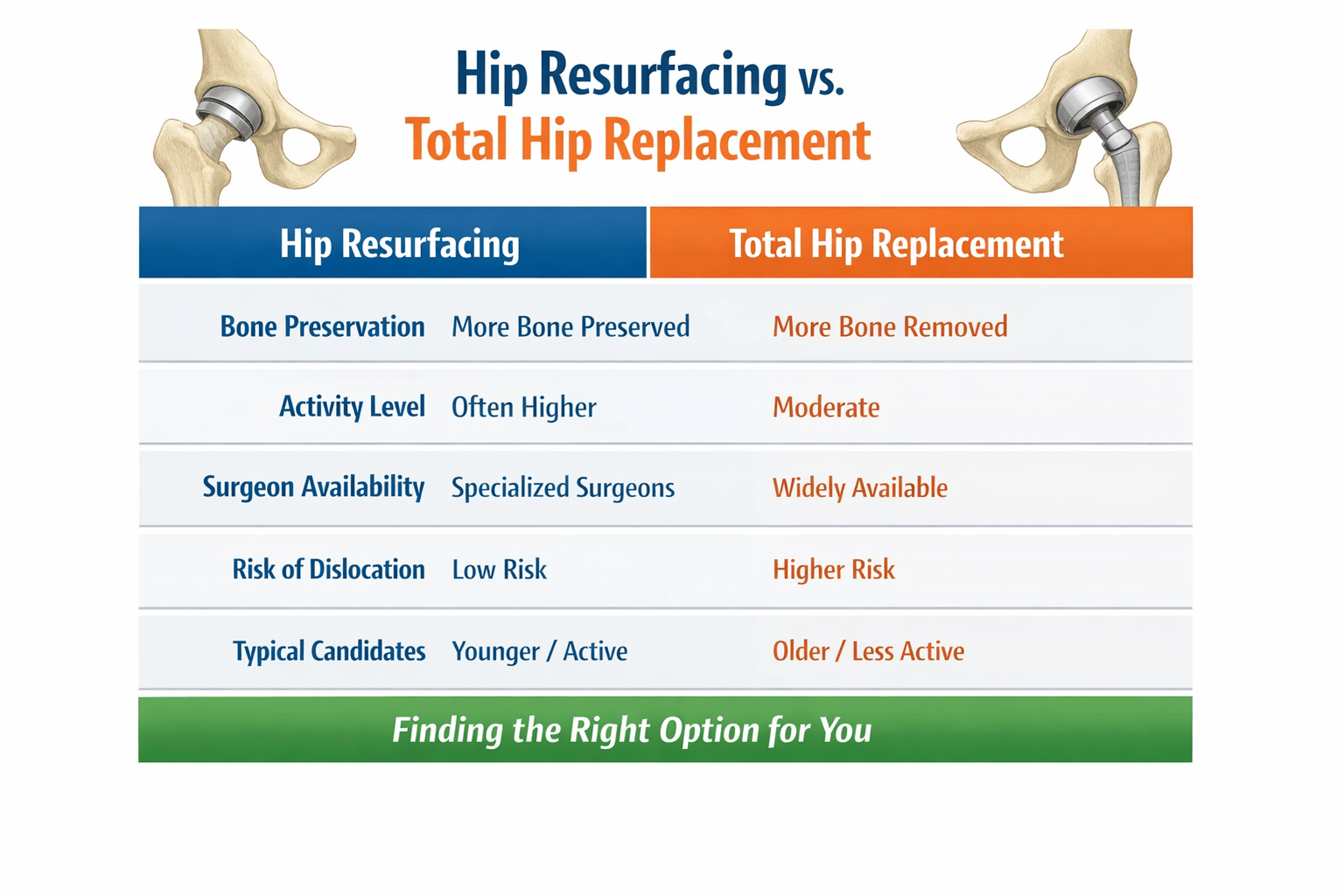
Why is Hip Resurfacing better than a THR - for the proper candidate?

 I prefer hip resurfacing over hip replacement, in the proper candidate, for many reasons:

- It is much more conservative with respect to bone loss, on the femoral side. On the acetabular (socket) side, there is a slight increase in bone resection, but most failures are not socket-related, so that is less important. Why would you want to cut away 3 inches of healthy femur, especially in a young person, when the only problem is damage to the cartilage surface? Just replace the surface!

- The above argument only holds water if the results of resurfacing are comparable to replacement. They are, in the right candidate: younger, healthy bone which is not too distorted, active, good kidney function, no nickel allergy, not a woman of child bearing age.

- It is more natural. Subsequent bone loading is exactly how nature designed it, on the upper bone of the femoral head, from the top down. Hip replacement actually reverses normal loading. As stresses from weight bearing are applied to a conventional hip replacement, they pass down the stem, bypassing the remaining upper bone, and overloading the bone farther down the thigh. The end result is that years later, the bone in a resurfaced patient is closer to normal, but the bone in a replacement patient is weak in the upper femur, and strong down below.

- It hurts less. You don't get a root canal of your thigh bone.

- It feels better. I have an interesting group of patients with a replacement on one side (from years ago) and now a resurfacing on the other. They all prefer the resurfacing.

- There is some evidence from gait studies that function may be better than hip replacement.

- Most resurfacing patient ultimately get back to completely normal activity. Most hip replacements do not. Of course, some of that is due to the younger population we are resurfacing.

- It is less likely to result in leg length inequality.

- It is less likely to dislocate, by a factor of 10.

- Range of motion has the potential to be normal. This depends on many factors.

- Most importantly to younger patients, is the ease of revision. If you need further surgery in the future, and you have already had a total hip replacement, you may be facing a revision of your stem. Revisions can be a big deal. If the stem is loose, if cement has to be removed, if the upper bone is weakened (see above), if there is a fracture, or infection, you are likely to need a revision-style stem. These are long, larger diameter stems, perhaps modular, maybe requiring bone grafting, extended trochanteric osteotomy, cortical windows, wires, cables etc. The long-term results of these stems is nowhere near as good as first time hip replacement.

If you need further surgery, and your hip was previously resurfaced, guess what? You get a first-time total hip stem, with all the attendant excellent results of that, and if your socket is still fine, the surgeon will leave it alone, put a big metal head to match it on your stem, and you're done. Half the work of a hip replacement, with the excellent wear properties, range of motion, and resistance to dislocation of the big head.

That alone would be enough to convince most young patients to try a resurfacing, even if the results were not quite as good as hip replacement. The fact is, the results are just as good, or even better in some reports.


L10 Web Stats Reporter 3.15 LevelTen Hit Counter - Free PHP Web Analytics Script
LevelTen dallas web development firm - website design, flash, graphics & marketing
Contact Patricia

Advertisements

Advertise on
Surface Hippy


8000
Unique Visitors
per month use
Surface Hippy


Contact Patricia

Hip Talk generates over 50,000 page views a month.

Surface Hippy would like to Thank the many supporters of the website. 

The website content is not controlled by any medical companies, doctors or hospitals.

 

What's New?

Dr. Bose presented plaque by overseas patients

Dr. Bob Arnot's Bi-lat hip resurfacing story with Dr. Su

What hip resurfacing device is most popular?

Hip Resurfacing Surgeons Video Interviews


Web design by Patricia Walter Copyright Surface Hippy 2006

Statistics Page

Mission Statement - Surface Hippy is a patient to patient guide to hip resurfacing. It does not provide medical advice. It is designed to support, not to replace, the relationship between patient and clinician.
Advertising - Revenue from this site is derived from Google Ads, commercial advertising and individual donations.
Privacy - Surface Hippy does not share email addresses or personal information with any group or organization.
Content - Surface Hippy is not controlled or influenced by any medical companies, doctors or hospitals.
All content is controlled by Patricia Walter  -
Joint Health Sites  LLC